|


|
|
The
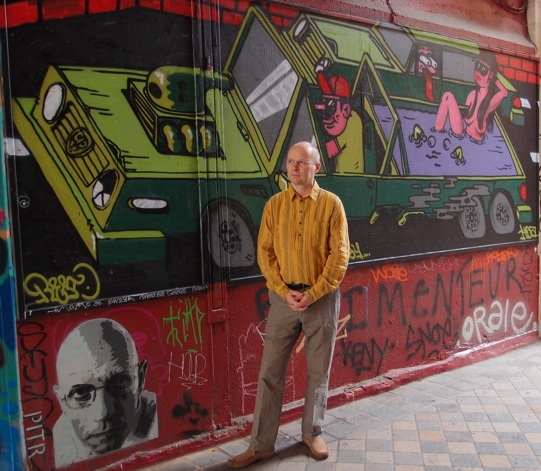
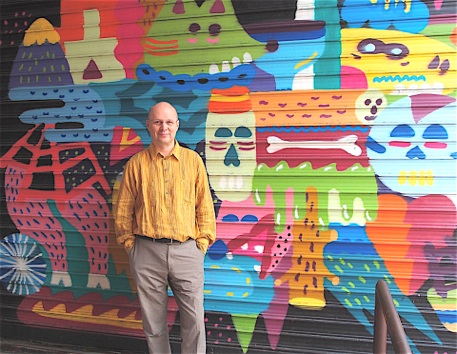
Finnish cellist Anssi Karttunen
leads a busy career as a soloist and
chamber-music player, performing
extensively all over the world. He
performs on modern cello, classical and
baroque cellos and on violoncello piccolo.
Anssi
Karttunen performs all the standard cello
works, but has also discovered many
forgotten masterpieces and arranged a
number of pieces for cello. He is a
passionate advocate of contemporary music
and his collaboration with composers has
led him to give over 90 world premieres of
works by composers such as Magnus
Lindberg, Kaija Saariaho, Rolf Wallin,
Luca Francesconi and Tan Dun.
Karttunen
has had a number of Concertos written for
him, 18 in all: Magnus Lindberg's Cello
Concerto in 1999, Esa-Pekka Salonen's
Concerto "Mania" in 2000. Martin Matalon's
Cello Concerto 2001 and in 2004 Luca
Francesconi's Cello Concerto "Rest". Kaija
Saariaho's Concerto "Notes on Light" was a
Boston Symphony Orchestra commission for
Anssi Karttunen and Los Angeles
Philharmonic has commissioned a Concerto
from Oliver Knussen.
Some
of the orchestras Karttunen performs with
:
Philadelphia
Orchestra, Los Angeles Philharmonic,
Boston Symphony Orchestra. Philharmonia
Orchestra, BBC Symphony, BBC Philharmonic,
BBC Scottish, London Sinfonietta.
Orchestre de Paris, Orchestre National de
France, Orchestre Philharmonique de Radio
France, Ensemble Orchestral de Paris. DSO
Berlin, SWR Orchestra, Berliner
Symphoniker, Ensemble Modern.
Goncertgebouw Orchestra, Rotterdam
Philharmonic, Residentie Orchestra, Dutch
Radio Symphony, Dutch Radio Philharmonic,
Dutch Radio Chamber orchestra. NHK
Orchestra, Tokyo Philharmonic, Tokyo
Metropolitan Orchestra. Barcelona Opera
Orchestra, Barcelona Symphony Orchestra,
Pamplona Orchestra, Barcelona 216
Ensemble. Swedish Radio Orchestra, Danish
Radio Orchestra, Oslo Philharmonic. RAI
Torino, Luxembourg Philharmonic, Flanders
Philharmonic. Finnish Radio Orchestra,
Helsinki Philharmonic, Avanti!.
Karttunen
performs at major festivals in Europe:
Edinburgh, Salzburg, Lockenhaus, Spoleto,
Berlin, Venice, Montpellier, Strasbourg,
Helsinki etc..
The
CD´s of Anssi Karttunen range from
the complete Beethoven works for cello and
fortepiano (on period instruments) and
20th-Century works for solo cello to
concertos with London Sinfonietta and Los
Angeles Philharmonic with Esa-Pekka
Salonen. Sony Classical issued the
Concertos of Lindberg, Saariaho and
Salonen on CD. Deutsche Grammophon issued
a DVD of Tan Dun's The Map for cello,
video and Orchestra. He appears on the
first ever contemporary music CD-ROM:
Prisma, on music of Kaija Saariaho.
He
is a founding member of www.petals.org,
a non-profit organisation for the
production and sale of CDs on the
Internet.
Anssi
Karttunen has also appeared as conductor,
he conducted Lindberg's Kraft in Antwerp
on a very short notice. He also conducted
the Los Angeles Philharmonic cello
ensemble and the Gaida Ensemble in
Vilnius.
Between
1994 and 1998 Mr Karttunen was the
artistic director of the Avanti! Chamber
orchestra. He was the artistic director of
the 1995 Helsinki Biennale and the
Suvisoitto-festival in Porvoo, Finland
from 1994 to 1997. From 1999 to 2005 Anssi
Karttunen was the principal cellist of the
London Sinfonietta.
His
teachers included Erkki Rautio, William
Pleeth, Jacqueline du Pré and Tibor
de Machula.
|
|
Concertos
written for Anssi
Karttunen:
|
Magnus
Lindberg
|
Zona
|
|
Paavo
Heininen
|
Cello
Concerto
|
|
Magnus
Lindberg
|
Kraft
(with Toimii Ensemble)
|
|
Magnus
Lindberg
|
Duo
Concertante (with
Clarinet)
|
|
Usko
Meriläinen
|
A
Letter to a Cellist
|
|
Jean-Luc
Darbellay
|
Concerto
|
|
Olli
Kortekangas
|
Konzertstück
(with Clarinet)
|
|
Kaija
Saariaho
|
Amers
|
|
Kaija
Saariaho
|
..
à la fumée (with
alto flute)
|
|
Tan
Dun
|
Yi1:
Concerto for Cello
|
|
Magnus
Lindberg
|
Cello
Concerto
|
|
Esa-Pekka
Salonen
|
Mania
|
|
Martin
Matalon
|
Trame
III, Concerto pour
violoncelle
|
|
Luca
Francesconi
|
Concerto
(2004)
|
|
Mary
Bellamy
|
Within
Dreams I
|
|
Antonio
Pinho Vargas
|
Six
Portraits of Pain
|
|
Kaija
Saariaho
|
Notes
on light (2007)
|
|
Kaija
Saariaho
|
Mirage,
for soprano, cello and orchestra
(2008)
|
Future
commissions:
|
Oliver
Knussen
|
Concerto
(for the Los Angeles Philharmonic
2008)
|
|
Ricardo
Nillni
|
Work
for cello, harp and ensemble
(2008)
|
|
Magnus
Lindberg
|
Concerto
II (2009)
|
|
Fred
Lerdahl
|
Work
for cello and ensemble
(2009)
|
|
|
INTERNATIONAL
CELLO FESTIVAL,
Manchester
2004
"..More
awe was to come, with
Lindberg's Cello
Concerto, performed by
the Finn Anssi
Karttunen, for whom the
composer wrote it.
Lindberg's devilishly
unplayable score takes
the soloist and his
cello to the point of
collapse with its
lightning runs,
unearthly screeches and
numerous other
molestations. Then it
all does collapse, into
moments of unbearable
time-stopping stillness
- during one of which
Rumon Gamba held his
score frozen in
mid-page-turn for what
seemed like minutes, as
if terrified of breaking
the cruel spell
Karttunen had cast."
The
Times, London, May 8,
2004
|
He
stands, and sits, to
conquer
Cellist
Anssi Karttunen shows he's among
the world's greats; he conducts
too.
Mark
Swed, Los Angeles Times
16.1.2003
The
world's two most charismatic,
most beloved cellists are,
without question, Mstislav
Rostropovich and Yo-Yo Ma. But
for a growing number of
cognoscenti, this spectacular
Finnish cellist has no equal, and
it was heartening that his guest
appearance with the Los Angeles
Philharmonic New Music Group sold
out on Tuesday
night.
Karttunen
wasn't, to be honest, the only
attraction; the program ended
with Esa-Pekka Salonen conducting
the West Coast premiere of
"Mania," the dazzling chamber
cello concerto he wrote for his
longtime friend and colleague in
2000. But it was mainly
Karttunen's night. He conducted,
as well as played. His third hat
was as arranger; he led the first
performance of his version for
eight cellos of a piano etude by
Magnus
Lindberg.
In
all, it was a night to dive deep
into the sound of the cello, a
sound Karttunen called, in a
preconcert discussion, so
beautiful you never want it to
end. Preceding "Mania," there was
cello and nothing but, with five
relatively short works for
ensembles of six, seven and eight
cellos.
The
opener was Pierre Boulez's
"Messagequisse", a score from
1976 for solo cello against an
ensemble of six cellos. Dedicated
to Paul Sacher, it is a quick
series of bracing coded messages
to the late Swiss philanthropist,
using the letters (translated
into musical pitches) of his last
name as the basic material. The
music has a breathless, fleeting
quality, always in dizzying
motion but, hummingbird-like,
seeming still and just out of
grasp. It leaves behind a long,
lingering impression. Salonen
conducted as if born to the
style, making one wonder why he
conducts so little of Boulez's
music these
days.
Putting
down his bow, Karttunen conducted
Hans Werner Henze's "Trauer-Ode
für Margaret Geddes,"
Luciano Berio's "Korót,"
and Karttunen's own arrangement
for eight cellos of a piano etude
by Magnus Lindberg. The Henze, a
funeral ode in memory of a German
princess, is thickly scored for
six cellos, almost decadent in
its bittersweet harmonies and
Bach-haunted. The Lindberg etude
is fantastical, flamboyant music,
at times sounding as lavish as
the richest Richard Strauss in
this cello-intensive arrangement.
Berio's piece (korót means
beam in an ancient language, but
Karttunen forgot which one), also
for eight cellos, buzzes
ethereally and beautifully.
Karttunen conducted everything by
dutifully beating time, but he
knows what cellos can do and
managed to inspire gorgeous
playing from the Philharmonic's
cello
section.
"Mania"
is one of Salonen's most
attractive scores, with a
burbling 14-piece ensemble
conveying a series of changing
landscapes. Against this,
Karttunen plays wonderfully
rhapsodic melodies and exciting
bravura passages, and he does so
with cool abandon, impossibly
contradictory as that may sound.
The piece lasts about 18 minutes
and doesn't, for a second,
linger, although it is seldom
quite as manic as the title
suggests.
Salonen
has said that Sibelius was an
influence and there are nods to
Ravel and Debussy in the colorful
orchestration and to Stravinsky
in the frantic closing pages. But
the stronger impression is
Salonen's own personality in
music that is clever and
entertaining on the surface but
also complex in a deeply
intriguing and satisfying way.
The performance was full of
joy.
|
|
|